I just wanted to remind everyone there's less than one week to go before we give away some free organic soaps. So if you had intended to have a go, now's the time to do it before it's too late.Sunday, July 26, 2009
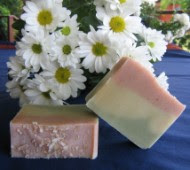
Handmade soap giveaway
I just wanted to remind everyone there's less than one week to go before we give away some free organic soaps. So if you had intended to have a go, now's the time to do it before it's too late.Saturday, July 18, 2009
Our making soap journey
I've been asked by a few people if I could show the soapmaking process I use to make my handmade soaps. This is not a lesson on how to make soap, but just a peek into the different steps it takes to come to the final soap bar that I sell.
1. The first thing I do is set up everything I need to make the particular soap recipe I'm using. Yes, I do use recipes, why? well, because my poor old memory just isn't as good as it used to be ;o) Some soap makers use the exact same recipe for each and every soap batch they make, only changing the colour and fragrance used. I know this would be sooo much easier, but I'm not inclined to take the easy way but what I think is the best way.
I have a different recipe for each of my soaps because I like to offer you a variety to choose from, some people like soaps that are creamy while others like lots of bubbles, that sort of thing. As you can see there is quite a bit to get together, the equipment and all the ingredients, but it makes it so much easier to have everything on hand when I need it.
2. I then measure all the ingredients needed by weight, it all has to be exact, there is no adding a bit here and a bit there with soap making if you want consistent results every time. Here you can see all the different butters and coconut oil used.
3. The liquid component is then measured by mls. depending on what fluid I'm using for the soap recipe. The one I'm making today is "Touch of Heaven", so I have used water in this instance to make the lye that is needed to make soap. I also use fresh Goat's Milk or Coconut Cream to make milk soap as well as Green Tea or organic Carrot Juice in some of my other soap recipes. The liquid is used to make a lye solution and I make it first as it takes the longest to cool down. Yes, lye is a necessary part of soap making. No lye, no soap!
4.
All the oils and butters are now melted. The next part is the bit I find the most time consuming, the soap oils and the lye have to reach the same temperature which is done using 2 thermometers, one in the saucepan with the oils and butters and the other in the lye solution. Sometimes this takes a bit of jiggling to get them both the same temperature at the same time and one or both containers might need to go into either a cold or hot bath to try and get them to the same temperature. Oh, what fun!
5. While I'm waiting for this I line my wooden soap moulds with baking paper and get the essential oils and any extra additives ready to add a bit later.
6. Here I'm pouring the lye into the soap oils which are now both the same temperature and is ready to be mixed together. I use a stick blender to do this because it is so much easier and faster. At first the mixture is quite thin but as you blend it starts to thicken and turns into a lighter creamy mixture, I keep blending until it is thick enough to hold what is known as trace. This is when you are able to take the stick blender out of the soap and drizzle a small amount over the top of the mixture and it leaves a slight trail on the surface.
7. We are now ready to add any extras to our soap mix; this is the best time to add any ingredients such as dried herbs or oatmeal as they can be evenly dispersed through the mix without sinking to the bottom. I'm adding essential oils of rose geranium, spearmint, lavender and may chang and finely ground oatmeal here. 
8. Once the essentials oils and oatmeal has been mixed through I take some of the traced soap out and mix it with some natural argyle clay to make this pink colour which will be added in with the white soap to make a swirl.
9. I've now added half of this pink mixture into the main part of the soap in the saucepan without mixing through and it is then poured into the soap mould.
10. Once I have all of the soap mix into the soap mould I pour over that other half of the pink mix I had kept aside just to add a bit more decoration on the top so that each soap bar looks pretty.
11. Now all we need to complete our soapmaking for the day is heat. Soap needs some heat for the saponification reaction to occur naturally and turn our box of soap oils into some beautiful All Natural Soap. To do this I first cover my soap mould with a piece of timber and then over the top of this I place a folded towel.
While our soap is hibernating, it will be going through a gel phase, this is where it gets quite hot and develops a sort of jelly like look, this is a good thing and ensures the soap cures as quickly as possible.
12. The soap is then left overnight to do its thing and cool down again and sometime the next day it is taken out of its soap mould to see how it has turned out. I can't wait to get up in the morning and take a peep at what has happened. You can see here that our soap has lightened in colour.
13. The next step is to cut our soap slab above into 3 separate logs and then into each individual soap bar. I love this part as it's always a surprise as to how the soap is going to look once cut and each batch is different.
The soap bars are then stored standing up as you see them below and separated to allow air flow between them for at least four weeks to allow them to cure. Curing time is needed for soap to get rid of any excess water and to turn into mild, longer lasting handmade soap. During this time the soap goes through its final changes, turning into its final colour and making smoother, harder bars of soap. Ahh, there's nothing like the feel of a beautiful handmade soap!
Wednesday, July 1, 2009
Would you like some FREE Organic Soaps?
.jpg)
First of all happy 1st July to everyone!
Now, down to business. I’d like to show you a photo of my Bath Bombs I made to sell at a previous market. I hadn’t made them before so I was quite proud of them really :o) I thought they looked pretty good and they smelt just beautiful.
It was quite sad really, not one of them sold (well, only one to one of my friends, so that didn’t count :o)). Now, I don’t know why they didn’t sell. Was it because:
• They are not pretty enough.
• Are people just plain over the cup cake thing? (that was one comment I overhead a lady say to her friend)
• Don’t people like bath bombs anymore?
• Are they the wrong price? (I was charging $6.00 for unwrapped and $6.50 for gift wrapped)
I’d really like to know! And I’d love to hear your comments!
I’m offering 2 FREE bars of my beautiful, well in my opinion ;o) Handmade All Natural Soaps to give away to whoever can come up with the best explanation for my Bath Bombs not selling.
I’m going to give you a whole month to get your thinking caps on and I’ll let you know who had the best explanation and wins the 2 FREE bars of Organic Soap on the 1st August, 2009.
So tell all your friends everyone! Happy thinking!
Saturday, June 27, 2009
All Natural Lavender Goat's Milk Soap
.jpg)
Just to let you all know that a new batch of "Lavender Goat’s Milk" is made and curing. Yes, it will be ready for the next markets for those of you wanting to buy some then, it will be ready to go on the 4th July, 2009.
For those of you who haven’t tried our Lavender Goat’s Milk yet, you don’t know what you are missing. This all natural soap is one of our best sellers. You need to try it to know just how beautiful it feels on your skin. It has added sweet almond oil, avocado butter and mango butter added to make it extra luxurious.
Of course none of our All Natural Soaps contain any nasty synthetic fragrances or colours. It has a purple swirl through it , which is a natural colour from Alkanet Root and the soap itself is a creamy colour (which is the natural colour of soap made with goat’s milk) we do not add Titanium Dioxide to make it white or bleach it, no way, it’s left nice and natural because that’s the way we like it. When we say All Natural, we mean All Natural.
Thursday, June 25, 2009
Pure All Natural Soap for your Baby
.jpg)
Good news everyone, we have listened to what Mums are wanting to wash their bubby with, so our “So Pure Baby Bar” now has a touch of pure Lavender and Tangerine Essentials oils added.
Why? Sadly, some Mums choose their baby products on how nice they smell, not realizing the chemicals lurking beneath that pretty fragrance, so we’ve decided to offer you a much safer alternative to chemical filled baby soaps.
Anyone who has read the section on chemical effects of perfume in my last post would realize the dangers of using synthetic fragrances in our skin care products. This is especially true for our babies because of their super sensitive skin. We need to be particularly careful about what we rub onto their skin and what fragrances our babies inhale.
I’ve specially chosen Lavender and Tangerine essential oils to fragrance our All Natural Baby Bar because, not only does it smell beautiful but because of the benefits these particular essential oils have.
The little cutie pictured here is one of my beautiful Grand-daughters :o)
· Lavender is an excellent sedative oil known to calm, relax and help promote sleep; it is also particularly soothing for inflamed skin conditions such as eczema and nappy rash.
· Tangerine also makes a wonderful babies oil, it’s great for helping with insomnia and restlessness and smells “just beautiful”.
If you’d like a chemical free 100% natural soap bar to take care of your babies delicate skin, Pure and Natural AromaBeauty now offers you one that is pure and gentle and smells wonderful as well.
Thursday, June 18, 2009
What Does That Label Really Mean?
When I mentioned that my All Natural soaps didn’t contain chemicals like the Lush soaps do, she said “oh no, Lush soaps are all natural”. Now I know that this is not the case as a friend of mine had given me one of their large, full colour brochures that contained a list of the ingredients used in their soaps. When I explained this to the lady she was still adamant that Lush soaps are “all natural.”
WHY IS THIS? Maybe it’s because in their brochure it mentions quite a few times, about the ingredients used in their products being natural. We tend to take for granted that if a Company says their products are natural, then that makes them chemical free. Sadly, this is not the case.
Sure, Lush products do contain some lovely natural ingredients, but what about the chemicals that they also contain? To their credit Lush does mention quite openly on their website that there are some synthetic ingredients contained in their soaps, the reason they quote is “because they are the most effective, safe carriers for the natural ingredients we use.” Now I’m not sure that everyone would agree with this statement.
Lush isn’t the only Company that uses these chemicals in their soaps, in fact there are many, many more who use not only these chemicals, but numerous other chemicals, some of which are even more toxic than the ones used by Lush. I’ve only mentioned this particular Company because of the encounter I had with this lady on the weekend.
Let’s have a closer look at the ingredients contained in one of Lush’s soaps.
Ingredients:
Water, Propylene Glycol, Sodium Palm Kernelate, Sodium Stearate, Sodium Lauryl Sulfate, Perfume, Glycerine, Patchouli Oil, Orange Oil, Lavendin Oil), Pine Oil, Lemongrass Oil, Elemi Oil, Sodium Chloride, Tetrasodium EDTA, Gardenia Extract, Colour 18050.
Propylene Glycol - exposure to high levels of Propylene Glycol is known to cause serious and potentially irreversible health conditions. According to the safety data sheets of industrial chemical manufacturers, chemicals such as Propylene Glycol will cause serious health conditions, including liver and heart damage and damage to the central nervous system if sufficient is absorbed by the body. This chemical has also been linked to Neurotoxicity, Endocrine disruption and Cancer.
Propylene Glycol is used as antifreeze, airplane de-icer and to make polyester and solvents in the paint and plastics industries, just to name a few. When you purchase a drum of propylene glycol from a supplier, that supplier is required to furnish an MSDS (Material Safety Data Sheet). The MSDS for propylene glycol says "Avoid skin contact." Does this sound like something you want to be using on your skin every day?
Sodium Lauryl Sulfate (SLS) - This chemical is used in soaps and shampoos because it is an inexpensive detergent that allows the product to foam well.
A report published in the Journal of The American College of Toxicology, showed that concentrations as low as 0.5% could cause irritation and concentrations of 10-30% caused skin corrosion and severe irritation. Some soaps have concentrations of up to 30%, which the ACT report called "highly irritating and dangerous". Studies have indicated that SLS enters and maintains residual levels in the heart, liver, lungs and brain from skin contact. Other research has indicated sodium lauryl sulfate may be damaging to the immune system, especially within the skin and can cause irritation to the skin, eyes or lungs.
Perfume - Shamefully, only 84% of the ingredients used in today’s synthetic fragrances have never been tested for human toxicity, or have had only minimal testing. In a list of 2,983 chemicals used by the fragrance industry, the National Institute of Occupational Safety and Health identified 884 toxic substances. These compounds are capable of causing breathing difficulty, allergic reactions, multiple chemical sensitivities, and other serious maladies, including neurological damage.
The FDA has acknowledged that the incidence of adverse reactions to perfume products appears to be increasing and that these reactions involve the immune and neurological systems. A recent government report targeted synthetic fragrances as one of the six categories of chemicals that should be given the highest priority for neurotoxicity testing along with insecticides, heavy metals, solvents, food additives, and air pollutants.
The only way you’ll know for sure ALL of the ingredients contained in a product, is to read the label carefully.
If you don’t know what an ingredient is and it sounds like it could be a chemical, you can be pretty sure it will be one. The Chemical and Beauty Industry tell us that "small" quantities of chemicals are "safe'"to use on our skin. But what happens when we are using these chemicals EACH AND EVERY DAY?
(Didn’t the Cigarette manufacturers deny any health risks associated with toxic chemicals contained in cigarette smoke for over 25 years?) We know for a fact that there is more and more cancer being diagnosed every day. Could it be that these chemicals we are bombarding our bodies with are building up in our system and making us sick? I personally think so.
Some people have told me they really don’t know how to tell if an ingredient is natural or chemical. The easiest way is to ask yourself, do you know what the word means? Like lavender, lemongrass, orange, we all know what these are. Also ask yourself, would you feel happy about eating it or rubbing it on your skin? I found that these methods helped me when I first learnt about chemicals in our skincare products.
Why risk using products that contain chemicals when there are safer alternatives to use?
Pure and Natural AromaBeauty offers you a chemical free safe alternative to chemical filled soap bars.
Monday, June 8, 2009
How do you choose the best soap for you?
.jpg)
With so many soaps available today, it can be very confusing trying to choose the right soap for your needs.
How do you choose?
- If you don’t mind using chemicals and don’t have a problem with dry or itchy skin, then your choice is easy, any supermarket bought commercial soap will suit your needs. Just remember that Commercial soaps are usually made with animal tallow (fat) and contain a variety of artificial chemicals, have a look at the ingredients listed on the pack of your current soap, you'll be surprised just how many chemicals are in there. Commercial soap can often irritate your skin and cause dryness and itchiness and allergic reactions because of the addition of chemicals, preservatives and synthetic additives, as well as the lack of natural glycerine, which is taken out and sold separately.
- Glycerine or melt and pour soaps. If you’re looking for true handmade soap, then look for soap that says it's made from scratch. Some so-called handmade soaps are actually “melt and pour” soap, which means that it is a pre-made soap base bought from a craft store or soap making supplier and a lot of these melt and pour soap bars are not much better than shop bought industrial soap. There is a huge difference between good quality handmade soap and industrial standard handcrafted soaps. Melt and pour bases are quick and easy to use and can be made into beautiful looking soaps, all that needs to done with this base is to place it into a pot and heat until it's melted. Once it's melted other ingredients can be added by the purchaser/handcrafter if they want to, before pouring and allowing to set, these bars are then called handmade. A bit like buying a packet cake mix from the supermarket and then making it yourself, it will still contain chemicals but will allow you to add extra ingredients if you’d like. The handcrafter may then say that these soaps are natural because they haven't added any extra chemicals to them, but fail to mention the actual ingredients contained in the pre-purchased melt and pour base. So if you want natural or organic soap always check the ingredients contained in the soap bar and look for the method used in making them, so you know exactly what you are buying.
- Good quality handmade soap is much gentler for your skin because it doesn’t contain that long list of chemicals that shop bought soaps contain and because it retains its naturally occurring glycerine. Glycerine is a gentle humectant that is wonderful for moisturising your skin and an important factor in the difference between handmade and industrially made commercial soaps. Are you wondering why supermarket bought bars don’t contain that vital ingredient glycerine?
Because the glycerine that naturally occurs in the soap making process is taken out and sold as a separate by-product to be used as a luxury ingredient in other products such as moisturiser, lotions and other skin care products (they make extra money that way).
If you decided you’d prefer the gentler handmade soap, you have a few different options.
1. The least expensive handmade soap will contain only the very basic oils. The main component of these soaps is usually palm oil and you’d normally find it listed 1st or 2nd on the ingredient listing on the soap label.
Palm oil is an inexpensive saturated vegetable oil, extracted from the fruit pulp of the Palm tree. Soaps made with high amounts of Palm oil produces a soap that is low in that all important glycerine, so it’s not as moisturising or as beneficial for your skin. Palm oil doesn’t have any specific good quality or advantage for your skin, but can be an inexpensive addition for adding hardness to soap bars.
A downside of Palm oil is that some countries are converting large expanses of land into palm plantations for oil using unscrupulous deforestation methods which is causing extensive pollution and damage to our environment. Because vast areas of habitat are being cleared for Palm Oil plantations, Orangutans are fighting for their survival, so protecting this land is critical. This type of soap also typically contains synthetic ingredients such as artificial colours and chemical made fragrances as they are a cheaper alternative to pure essential oils. This type of soap usually sells between approx. $1.00 and $4.50 a bar, dependent on weight.
2. A better option for your skin health is handmade soap containing olive oil as its main ingredient. Olive oil is so much gentler for your skin; it’s packed with vitamins and minerals and is high in essential fatty acids. It is believed to have healing properties and is wonderful for moisturising, softening and soothing your skin. Soap makers who specifically aim for skin benefit value choose olive oil as their main ingredient as it has no equal for its exceptional qualities.
Look for pure handmade soap that replaces the artificial colours and fragrances with the more expensive but much more beneficial for your health, pure essential oils, making them an All Natural Soap which is even better for your skin. You can expect to pay approx. $4.00 to $6.50 per bar depending on the weight and whether synthetic fragrance and colors or essential oils have been used.
3. Now if you’d really like to pamper yourself with the very best handmade soap, look for luxury all natural soap bars. These bars are similar to the soap above but they have added extra super-fatting oils such as Cocoa, shea, avocado or mango butters, apricot kernel, sweet almond, hempseed or avocado oils, all beneficial to your skin and extra nourishing. They’ll also contain other beneficial organic ingredients such as goat’s milk, green or herbal teas, aloe vera or coconut cream and pure essential oils. You can expect to pay between approx. $6.00 to $10.50 per bar dependant on weight for these luxurious soap bars.
I hope this has helped you to decide on the right soap for your needs. If you’re looking for luxury all natural soap bars then Pure and Natural AromaBeauty can help you find the perfect soap just for you.
.jpg)